
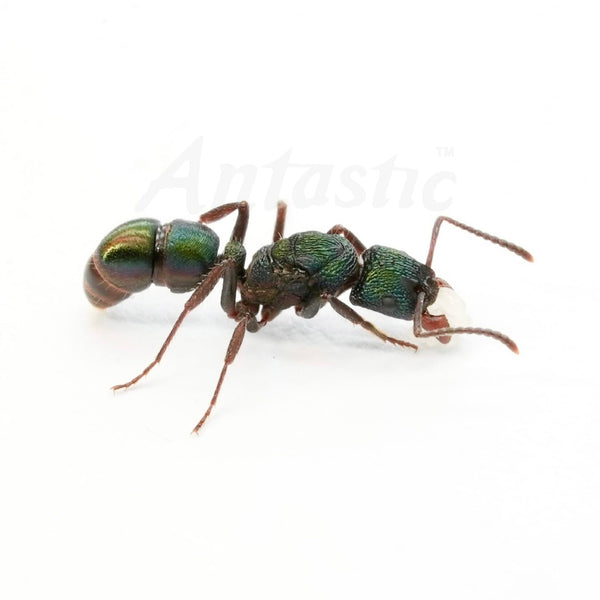


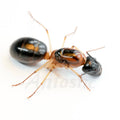
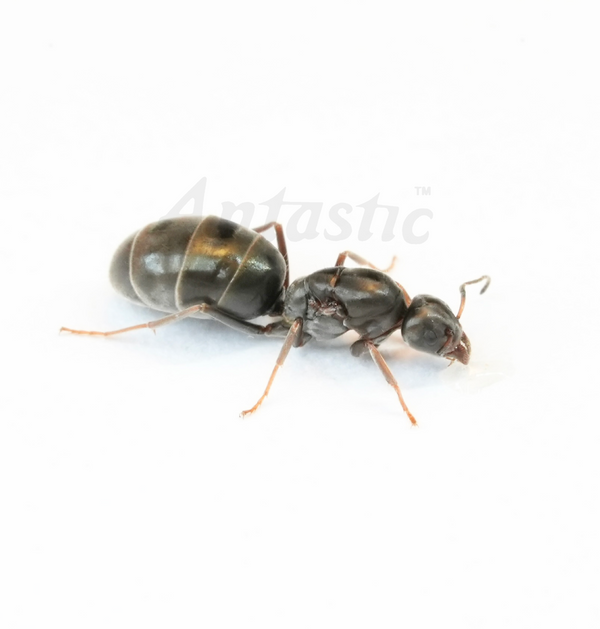


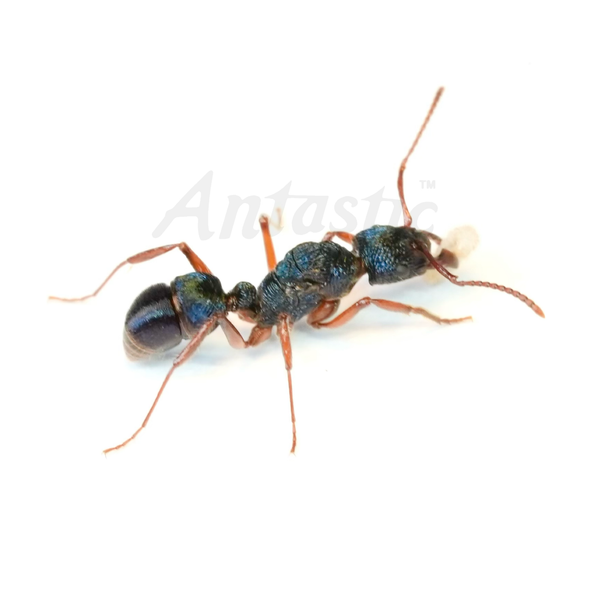













Polyrhachis australis (rattle ant) queen with her workers
- Lifespan Queen ants have remarkably long lifespans compared to other insects. Some species can live for several decades, with certain ant queens known to survive for up to 30 years.
- Reproductive role The primary role of a queen ant is reproduction. They are responsible for laying eggs, ensuring the continuity of the colony. In some species, a single queen can lay thousands or even millions of eggs in her lifetime.
- Size and appearance Queen ants are generally larger in size compared to worker ants. They often have a distinctive appearance with a well-developed thorax and abdomen, and a more robust build to support their reproductive duties.
- Winged stage Most queen ants go through a winged stage and take part in the “nuptial flight.” During this flight, young queens and males take to the air to mate. After mating, the males die, and the fertilised queens search for suitable nesting sites to start their own colonies.
- Mating once in a lifetime Queen ants usually mate only once in their lifetime. They store sperm from this single mating event and use it to fertilise eggs throughout their life. This allows them to establish new colonies without the need for continuous mating.
- Colony founding After mating and finding a suitable nesting site, the queen ant sheds her wings and starts the process of colony founding. She excavates a small chamber, lays her first batch of eggs, and takes care of the brood until the first workers hatch.
- Maternal care Queen ants exhibit remarkable maternal instincts. They provide care for their brood by nourishing and protecting the eggs, larvae, and pupae until they develop into adult workers. The queen’s pheromones also play a crucial role in maintaining order and social cohesion within the colony.
- Reproductive control Queen ants help regulate the development of their offspring. Through pheromones and the care the colony gives each larva, they influence whether larvae become workers, soldiers, or new queens.
- Fungus farming In fungus-farming species such as leaf-cutter ants, a new queen carries a small piece of fungus from her birth nest to start the colony’s fungal garden, which the workers then cultivate and feed upon.
- Staying home Once a queen ant establishes her colony, she typically remains in the nest and focuses solely on reproduction, while the worker ants perform the tasks outside the nest.
These are just a few of the remarkable aspects of queen ants’ lives. They play a vital role in ant societies and exemplify the complexity and diversity found in the insect world.


