














- Brood
- The ant-keeping word for eggs, larvae and pupae (cocoons) together.
- Claustral
- A method of starting a colony where the queen seals herself in a small chamber and does not forage for food. She does not need feeding until her first generation of workers has hatched, and she nourishes them on her stored body fat.
- Colony
- A queen together with her workers and brood, all living as one family.
- Formicarium
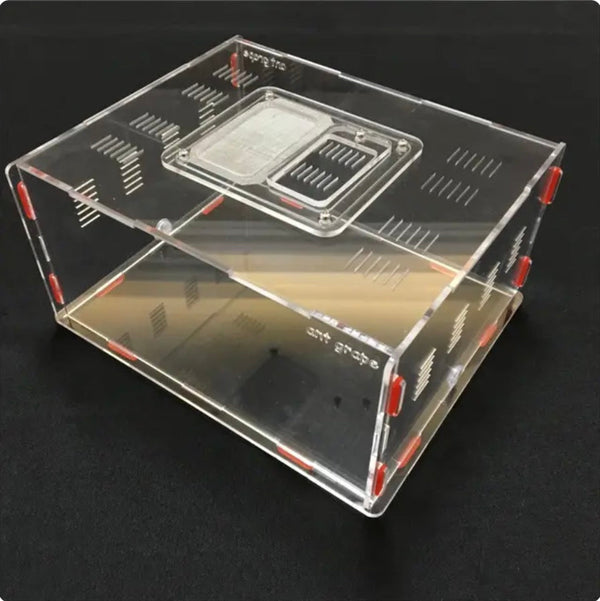
- An ant nest built for keeping and viewing ants, such as a Ytong, mesh, plaster or wood nest.
- Founding stage
- The period after a queen starts her colony, before she has her first workers. She is best kept in a test tube or small founding nest at this stage.
- Majors and minors
- Larger and smaller workers in the same colony. Majors usually defend the nest or crush food; minors do most of the everyday work.
- Nanitics
- The very first workers a queen raises. They are often smaller than later workers.
- Outworld
- The open area attached to a nest where ants forage, eat and drop rubbish.
- Queen
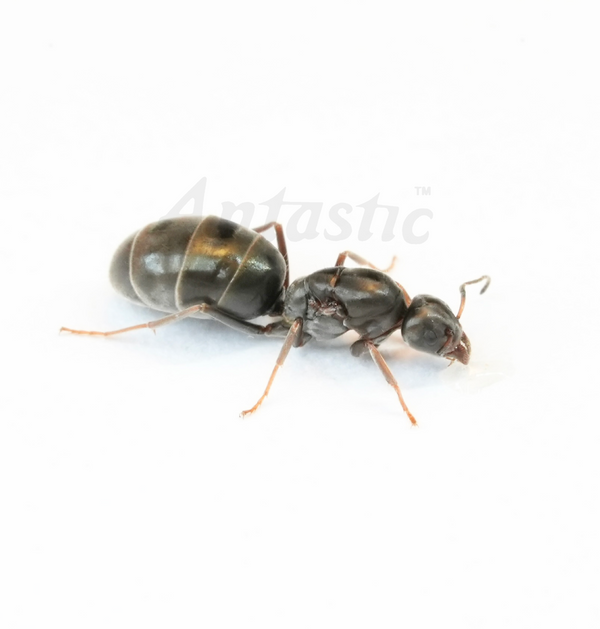
- The egg-laying female who starts and heads the colony. Some species can have more than one queen.
- Semi-claustral
- Unlike claustral queens, these queens actively go out and forage for food during the founding stage. They typically lack the large food stores that claustral queens use to feed the founding colony, so semi-claustral queens need feeding during the founding stage.
- Test tube setup
- A glass test tube with water held behind a cotton plug, used to house a queen during the founding stage.
- Workers
- Female ants that care for the queen and brood, forage for food and build the nest.
- Ytong
- A lightweight aerated concrete block that holds moisture well. It is a popular material for ant nests.
Ant care guides › Ant glossary
Ant care guideAnt glossary
Common ant-keeping terms explained in plain English.