













Ordering & shipping
What size test tube will my ant come in?
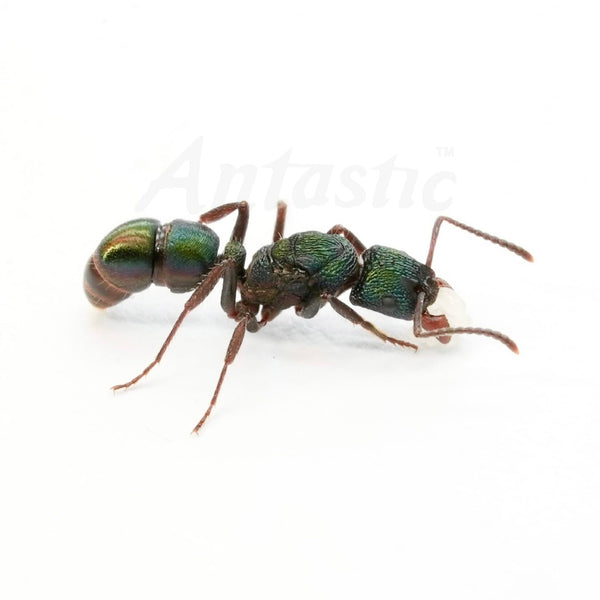
We use a range of test tube sizes depending on the species of ant. Typically, most of our ants are in 16mm diameter test tubes, with exceptions for large ants. These large ants include green weaver ants, which use 30mm tubes, and bull ants, which are usually in 20mm tubes.
If I have any questions, can I contact you for assistance?
Yes. Message us on Messenger, email ants@antastic.com.au, or use the form on our contact page.
If my queen dies in shipping will I get my money back?
Absolutely. Please see our 100% Arrive Alive Guarantee.
How long does shipping take?
It depends on when you order. We post live ants by Express Post on Monday and Tuesday mornings only, so they're never left in the post over a weekend. All other orders ship daily. Postage to locations in Queensland will typically take 1 to 2 days, postage to Sydney, Melbourne or Adelaide will take 2 to 3 days, and for all other locations, orders arrive anytime within 4 days.
How much is shipping?
Every order is a flat $12 by Express Post, anywhere we post in Australia, however many items you order. Free local pickup is also available in Brisbane's inner south. Choose it at checkout and we'll email you the pickup details.
Where are you based?
We are based in Brisbane and ship Express Post throughout Australia. Live ants can't be sent to Tasmania, and only some species can be sent to Western Australia. See our shipping page for details.
Choosing your ants & nest
What ant is the easiest to keep?
We have plenty of “easy care” ants, but pavement ants (Iridomyrmex bicknelli) are considered the easiest to keep, as well as the fastest growing and very cheap.
Should I get bull ants?
You should only get bull ants if you are very experienced and patient. They are very sensitive to disturbance, highly aggressive, have a painful sting, and take anywhere from 4 months to a year for an egg to hatch into a worker. Also, they usually only lay a few eggs at a time. It’s a long journey!
Should I get a 3D printed nest or a Y-Tong nest?
Typically, whichever one you prefer! You can usually just choose whichever nest you like the look of more, however, here are some differences between the two: The Y-Tong nest will retain moisture for longer than the 3D printed nests, meaning you will have to water them less frequently. They are also larger and can contain more ants. The Y-Tong are built to stand up on their side, however they can also be laid flat. The 3D printed nests must be laid flat. Finally, bull ants will not fit in the Type A (red) Y-Tong nests.
How many queens do I need for an ant farm?
You only need one queen. She will lay thousands of eggs throughout her life and keep the colony growing in size.
Which species will grow a colony the fastest?
It can depend on many factors including temperature, time of year, and diet, but typically we recommend pavement ants (Iridomyrmex bicknelli), meat ants (Iridomyrmex purpureus) and big-headed ants (Pheidole).
Which nest size do I need?
We recommend starting off small. A nest that is too big for the colony will stress them out, and they may die off. Remember, underground, ants don’t have much space, so it’s better for them to be cramped.
Getting started
What is a queen ant, and why is she important?
A queen ant is the primary reproductive female in an ant colony. She is responsible for laying eggs and ensuring the survival of the colony.
What is “brood”?
Brood is just an ant-keeping word for ant eggs, larvae, or cocoons.
How do I catch a queen ant?
Queen ants can be caught during their mating flights, during spring and summer. Use a test tube setup with a water-soaked cotton ball and a small entrance for easy capture.
Feeding
What type of food should I feed my queen ant?
Offer a sugary solution such as sugar water or honey, which provides a source of carbohydrates. During the founding stage, avoid solid foods as the queen may not be able to digest them.
How often should I feed my queen ant?
During the founding stage, provide a tiny drop of sugar water or honey every week or so. As the colony grows, you can increase the frequency of feeding. Be careful how much honey you put in, as the workers can get stuck in it and die.
How much food should I give to my queen ant?
Offer a tiny droplet of sugar water or a small dab of honey. It’s essential not to overfeed, as excess food can lead to mould growth and other issues.
How do I offer food to my queen ant?
Place a small droplet of sugar water or honey on a non-absorbent surface near the queen’s location, but towards the end of the test tube where the cotton blocking the entrance is. Avoid directly touching the queen with the food. Some people prefer to place the honey on a tiny piece of foil rather than directly in the test tube.
Can I provide other types of food besides sugar water or honey?
In the early stages, focus on sugar solutions. Once the colony has workers, you can introduce protein sources like small insects or protein-rich liquids.
What are some common protein sources for ants?
Small insects like fruit flies, small crickets, or mealworms, as well as insect-based supplements and protein jelly.
When can I start providing protein-rich foods to my queen ant and her colony?
Wait until the colony has grown and developed a decent number of workers before introducing protein sources. This is usually after the founding stage.
Is it possible to overfeed my queen ant?
Yes, overfeeding can lead to mould growth, excess moisture, and stress on the queen and colony. Feed small amounts and adjust based on their consumption.
What if the queen ant isn’t eating the provided food?
If the queen isn’t eating, she might not be hungry or might be in a resting phase. Ensure the food is easily accessible and try offering it again later.
How do the queens get food?
You will need to feed the colony regularly by placing a small amount of food in the test tube or outworld. They will need sugars (honey, sugar water, ant nectar) and protein (mealworms, crickets, or other insects) about once every 5–7 days.
How do the queens get water?
All of our queens come in a test tube, with half of the tube filled with water and blocked off by cotton. Some water seeps through the cotton and allows the queen and her colony to drink.
Housing & setup
What type of housing do I need for my queen ant?
A test tube setup is ideal for housing a queen ant. It provides a safe and humid environment for her to establish a colony. Once she gets some workers, her colony can expand to a small nest and outworld.
When should I move the queen ant to a new setup?
Transfer the queen and her first batch of workers to a small outworld setup when the test tube becomes too crowded. Make sure to provide a water source and food.
When should I move the colony into a nest?
Typically you should only move the ants when they no longer fit in the test tube and are often escaping when you try to feed them. Moving them in too early can cause them to become stressed and develop slowly.
Can I move the ant colony to a larger setup as it grows?
Yes, you can gradually introduce larger setups to accommodate the growing colony. Ensure the new environment has enough space, food, and water.
How do I move my ants into a new tube or nest?
If you’d like to move them, you can purchase some test tubes and a connector and make a new tube using cotton. Once the ends of the tubes are connected, move the new tube/nest into the dark (preferably warm too) and leave the old tube under some bright light, at a slight upwards angle if possible. It can take anywhere from ten minutes to a few weeks for a colony to move into a new tube or nest.
Do my ants need red sand or dirt in their outworld?
Care & colony growth
How often should I check on my queen ant?
It’s best to minimise disturbances during the founding stage. Check on her every week to avoid stressing her.
How often can I check on my ants?
This depends on the species. “Easy care” ants like big-headed ants and pavement ants typically don’t mind if you check on them often, as long as you do not turn, bump, or shake the tube. It is best to place them in a position that allows you to view them without picking up the tube, such as simply opening up a box and looking in, or lifting up a cloth that covers the tube. Some ants, like bull ants and other semi-claustral ants, are much more sensitive to disturbance and can eat their eggs or die if they are disturbed too often, so keep disturbances to a couple of times a week at the most for these ant types.
Can I handle the queen ant or her eggs?
No, avoid this – you could easily damage the eggs or stress the queen. In times of extreme stress she can eat her eggs.
When should I expect the first workers to appear?
It can take several weeks to a few months for the first workers to emerge, depending on the ant species and environmental conditions. See the first year of an ant colony.
What is the lifecycle of an ant colony, starting from the queen?
The queen lays eggs, which hatch into larvae. The larvae pupate and develop into adult workers. The colony grows, and the workers take over various tasks.
Troubleshooting
What signs indicate that my queen ant is unhealthy or stressed?
Signs include a lack of activity, sluggish behaviour, erratic movements, or a decline in egg-laying. Contact us for advice if you notice these symptoms.
What do I do if the queen ant stops laying eggs?
It’s normal for a queen to pause egg production occasionally, especially in colder weather. Ensure she has a stable environment, proper nutrition, and low stress.
If my queen isn’t laying any eggs, what do I do?
This happens often in winter. Ants tend to slow down and reduce activity when it is cold, so creating a warmer environment and feeding more protein can encourage colony growth.
If the cotton in the test tube has mould, what do I do?
Mould is not necessarily a problem. It’s usually only an issue if the ants are clearly avoiding it and moving to the other side of the test tube. If they are staying near the cotton and don’t seem to care, I wouldn’t worry too much.